What to Wear Cycling in Sardinia: A Season-by-Season Kit List
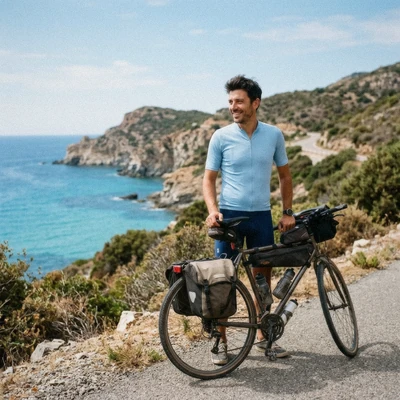
What to wear cycling in Sardinia comes down to a short list, because the tours already supply the two big items: the bike and the helmet. On my rides since 2017, from the flat cycle paths around Cagliari to the climb above Castelsardo, the packing question that actually matters is footwear, sun and one layer for wind, not a shopping list of specialist cycling kit. I'm Marco Deluca, and this guide covers exactly what to wear, what to bring, what the tours themselves already provide, and how the answer shifts between an April morning and an August afternoon that tops 32°C. None of it requires buying gear you won't use again at home.
Quick answer
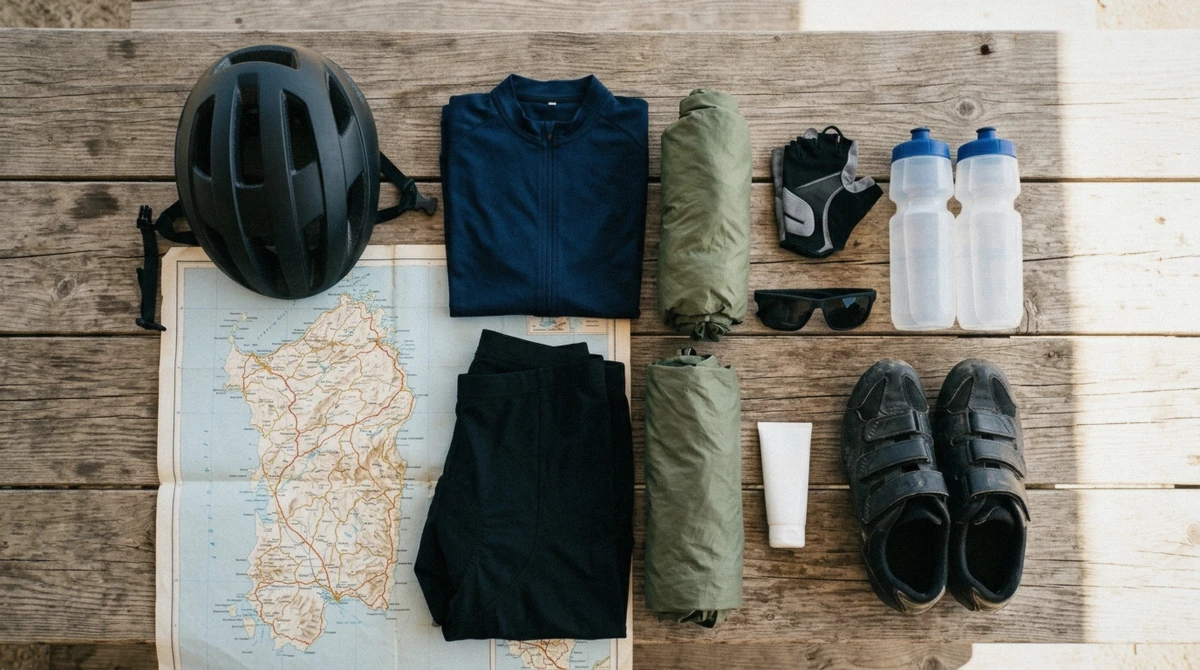
Every guided bike tour in Sardinia provides the e-bike and the helmet, so your own packing list is short: closed-toe shoes, sun protection, and a light layer for wind. Riding gear beyond that only matters if you plan to ride on your own outside a tour.
Key takeaways
- Closed-toe shoes are required on every tour, flip-flops and sandals aren't allowed on the bike
- The tours supply the bike and helmet, and the Castelsardo climb throws in a tyre repair kit too
- August riding days average 32°C at the top end, the full month-by-month breakdown is in our best-time guide
- The full-day Supramonte ride has a 130 kg rider weight limit and asks for sports shoes, not sandals
- A light windbreaker earns its space in a daypack even on hot days, the maestrale can turn a warm morning cold on a fast descent
- Nothing on this list needs buying new, most of it doubles as normal warm-weather travel clothing
Tours This Packing List Covers
This list applies directly to three of our rides: the technical Supramonte day, the climbing route to Castelsardo, and the bike-and-hike combination above Cagliari.
 from $116
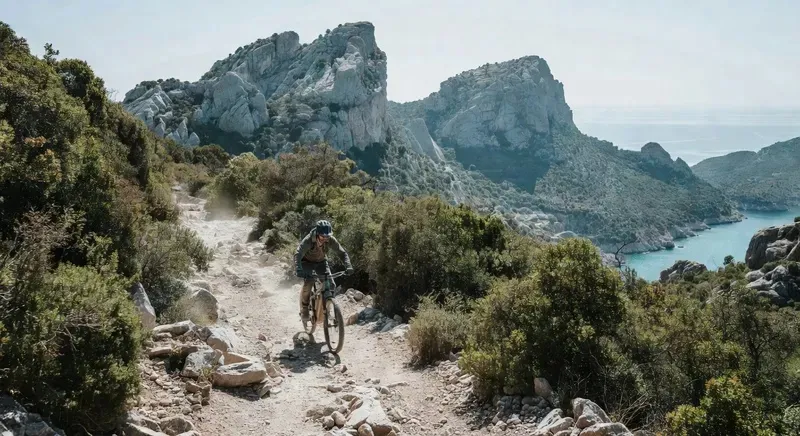
Cala Gonone & Dorgali Full-Day E-Bike Tour
A full-day e-bike adventure through some of Sardinia's most dramatic landscapes — from Cala Gonone through the wild Supramonte mountains, past the ancient Nuraghe Mannu archaeological site, into…
- Nuraghe Mannu archaeological site included
- Wild Supramonte mountain trails
- Vineyards, olive groves & hilltop Dorgali
- Premium Fantic XTF 1.5 Race e-bikes
 from $110
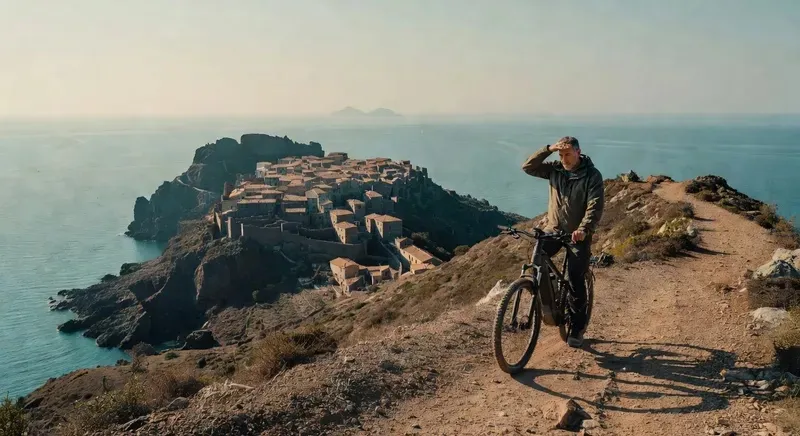
Castelsardo: Panoramic E-Bike Tour
Set off from Castelsardo — a pearl of northern Sardinia — and climb by e-bike to the summit of Monte Ossoni for sweeping views of the crystal-clear coast…
- Summit of Monte Ossoni — panoramic 360° views
- Roccia dell'Elefante & Paddaggiu nuraghe
- 30 km route, 700 m elevation gain
- Helmet & tyre repair kit included
 from $81
Cagliari: Bike & Hike Tour
The best of both worlds: ride e-bikes through Molentargius Natural Park alongside pink flamingos, then swap wheels for hiking boots and climb to the Devil's Saddle (Sella del…
- E-bike through Molentargius flamingo park
- Hike to Devil's Saddle panoramic viewpoint
- Gulf of Angels & Cagliari city views
- Bike, helmet & bottle of water included
What to Wear
None of these tours ask for technical cycling kit. What matters is fit, footwear and one layer for wind.
Base Layer
A breathable t-shirt or light long-sleeve in a quick-dry synthetic works for every route here. Cotton is the one fabric to leave in the drawer, it stays damp long after you've stopped sweating and turns cold the moment the wind picks up on a coastal descent.
Sun Protection
Sardinia's sun is strong from May through September, and none of the coastal or Supramonte routes offer much shade. A light long-sleeve layer or high-SPF sunscreen on exposed skin covers it. Reef-safe sunscreen isn't a local requirement here the way it is on some marine routes, but it's a sensible habit regardless.
Wind Layer
The maestrale, Sardinia's dominant northwest wind, is strongest on the west coast and can turn a warm morning cold on a fast descent. A packable windbreaker earns its space in a daypack even on routes that start out hot. More on how the wind affects specific routes is in our best-time guide.
Footwear
Closed-toe shoes are required on every tour on this site, sneakers or dedicated cycling shoes both work fine. The Supramonte full-day route and the Castelsardo climb both ask specifically for sports shoes rather than casual sneakers, since the terrain includes gravel and a real 700 m of elevation gain. Sandals, flip-flops and slippers are explicitly not allowed on the bike, not because of a dress code, but because an open shoe has no grip on the pedal and no protection if it slips.
| Color | Good? | Why |
|---|---|---|
| White | Good, with a catch | Reflects heat on hot climbs, though it shows road dust and dirt fast |
| Black | Usually bad | Absorbs heat on exposed July and August climbs, fine for an evening city ride |
| Bright yellow or orange | Good | Keeps you visible to traffic on shared coastal roads |
| Earth tones (olive, tan) | Fine | No real functional advantage or drawback on these routes, purely a style choice |
| Camouflage pattern | Fine, no restriction | Italy places no legal ban on civilian camouflage clothing, unlike some countries |
| Pastel or light blue | Good | Stays cooler than dark shades without the glare of pure white |
| Cotton vs. quick-dry synthetic | Cotton is bad | Cotton stays sweat-soaked on climbs and chills you on coastal descents |
What to Bring
Beyond what the tours provide, here's the short list worth packing. None of it is specialist cycling gear, most of these items already live in a normal warm-weather suitcase, so there's rarely a reason to buy anything new before the trip.
- Closed-toe trainers or cycling shoes, required on every tour, no exceptions
- Sunglasses, glare off the coastal roads and white stone adds up fast
- Reusable water bottle, two if possible, fountains are scarce along the routes
- Light windproof layer, the maestrale bites on exposed descents
- Sun hat that fits under a helmet, August sun tops 32°C at midday
- High-SPF sunscreen, no shade on most coastal stretches
- Small daypack or handlebar bag, for a phone, sunscreen and a light layer
- Cash, small bills, cafes and rural stops don't all take card
- Phone or camera in a secure pocket, cobbled streets and gravel jolt loose items
- Light gloves, grip on the Supramonte's gravel sections
- A spare shirt, August heat means you'll want a dry one after the ride
- Blister plaster or a small first-aid kit, saddle time adds up over a 45 to 70 km day
What Sardinia Tours Provide (So You Don't Overpack)
Here's what's actually included on the three tours this list covers, so you know exactly what to leave at the hotel.
| Item | Usually Provided | Bring Your Own | Notes |
|---|---|---|---|
| E-bike | Yes, on all three | No | The bike itself, no need to bring or rent your own |
| Helmet | Yes, on all three | No | Mandatory on every tour, already fitted before you set off |
| Tyre repair kit | Only on the Castelsardo climb | Elsewhere, no | The other two routes don't list one as included |
| Water | Yes, on the Supramonte day and the Bike & Hike tour | Yes, on Castelsardo | Castelsardo's own packing list asks you to bring water and snacks |
| Closed-toe or sports shoes | No | Yes, always | Every one of these three tours lists this as bring-your-own |
| Hiking boots | No | Yes, on the Bike & Hike tour | Only needed for the hike to the Devil's Saddle partway through |
| Sun hat | No | Yes, on Castelsardo | Not listed as included on the other two |
| Sunscreen | No | Yes, on Castelsardo | Same as above, bring your own |
| Daypack | No | Yes, on the Bike & Hike tour | For water, a layer and anything you carry on the hike section |
What NOT to Wear or Bring
Sourced from the tours' own rules, not general packing-blog guesswork. Every item below shows up in an operator's real "not allowed" list, not a generic warning copied from a different kind of trip.
- Flip-flops, sandals or slippers, banned on the bike itself across every tour we checked, no grip and no protection if a foot slips off the pedal
- High heels, a bad idea on any of the bike routes for the same reason as sandals
- Cotton as a main layer, it stays wet with sweat and turns cold the moment a coastal wind picks up
- Pets, not allowed on the Castelsardo route, check before bringing one along on any tour
- Loose jewellery or anything that can catch in a chain or a strap, better left at the hotel
Packing by Season in Sardinia
Sardinia's riding season stretches most of the year, what you wear changes more than whether you can ride at all. I've ridden the same Cagliari routes in April sunshine and again in a September breeze, and the bike, the helmet and the shoes on my feet never changed, only the layer over the base shirt did.
Spring (March to May)
April days top out around 20.0°C, mild enough for a light long-sleeve base layer, with a packable windbreaker worth carrying for descents, especially on west-coast routes exposed to the maestrale. Wildflowers are out across the interior, and this is genuinely one of the two best windows to ride in.
Summer (June to August)
July tops out at 31.6°C and August at 32.0°C, the two hottest months of the year. Pack light, breathable layers, a hat that fits under a helmet, and carry two water bottles, fountains are scarce along most routes. Ride the first few hours of the morning if you can, the heat builds fast by midday.
Autumn (September to November)
Temperatures ease back from the summer peak through September and October, and the sea stays warm well into the season. The exact month-by-month breakdown, including how quickly it cools, is in our best-time guide, but the practical packing shift is simple: drop one layer from your summer kit and add the windbreaker back for cooler mornings.
Winter (December to February)
Riding drops off outside the tours built for cooler weather. Temperatures stay mild by northern-European standards but cold enough that a proper layer under a jacket matters, especially early in the day. Full seasonal numbers live in our best-time guide if you're planning a winter visit specifically.
Riding on Your Own: The Extra Kit
Everything above assumes a guide leads the way. Riding solo changes the kit slightly: Italian law requires a reflective vest outside built-up areas after dark and in tunnels, a genuinely cheap thing to carry if there's any chance you'll still be out at dusk. Lights are required after dark too, a front white and a rear red.
None of this applies inside a guided tour, where routes are timed to daylight, it only matters if you're renting a bike and setting your own schedule. Our full guide to riding Sardinia without a tour covers the rental logistics and the rest of the rules of the road.
None of this requires an equipment shopping trip. The one non-negotiable is footwear, everything else on this list either doubles as normal travel clothing or comes standard with the bike tours across Sardinia you book.
Frequently Asked Questions
What shoes do you need for a bike ride in Sardinia?
Closed-toe shoes on every tour, sneakers or cycling shoes both work. The Supramonte full-day route and the Castelsardo climb specifically ask for sports shoes rather than casual sneakers, since both routes include gravel sections.
What should you pack for a summer ride?
Light, breathable layers, a hat that fits under a helmet, high-SPF sunscreen and two water bottles. July averages 31.6°C and August 32.0°C at the top of the day, so an early start and light colors both help.
What do the tours provide?
The e-bike and the helmet on every tour covered here, plus a tyre repair kit on the Castelsardo climb and water on two of the three routes. The full breakdown is in the provide-versus-bring table above.
What should you not bring on a ride?
Flip-flops, sandals or slippers top the list, none are allowed on the bike itself. Cotton as a base layer and loose jewellery are the other two worth leaving at the hotel.
What do you wear cycling in Sardinia in October?
Roughly a layer lighter than summer kit: a base layer, a light windbreaker for the cooler mornings, and closed-toe shoes as always. The sea and air are both still mild in October, full numbers are in our best-time guide.
Can I wear jeans cycling in Sardinia?
No. Denim doesn't stretch or dry, it chafes on a saddle and stays wet if the weather turns. A quick-dry legging or a pair of shorts works better for every route here.
Can I wear shorts cycling in Sardinia?
Yes. Quick-dry shorts are fine on every route on this site, just avoid raw cotton and make sure the hem won't catch on the chain if the bike doesn't have a full chain guard.