Cycling Sardinia on Your Own: Rentals, Rules and When a Guide Earns It
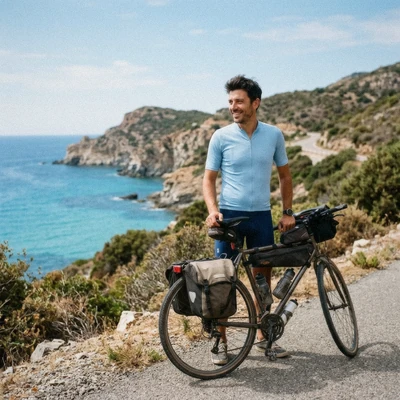
Yes, you can ride Sardinia on your own, and on a good share of the island it is the obvious choice. Rental is straightforward in Cagliari, Alghero, Olbia and Pula, the road surfaces are decent, drivers are used to cyclists on the known cycling roads, and a hybrid bike runs about €20 a day (about $23) with an e-bike closer to €40 (about $46). Where independent riding gets harder is the mountain and gravel ground, where navigation and mechanical backup matter more than fitness. This guide covers what renting actually costs, the Italian road rules that apply the moment you leave a town, where self-riding works best, and the specific situations where paying for a guided day is the better decision. Rates use about 1 euro to 1.16 dollars in current rates.
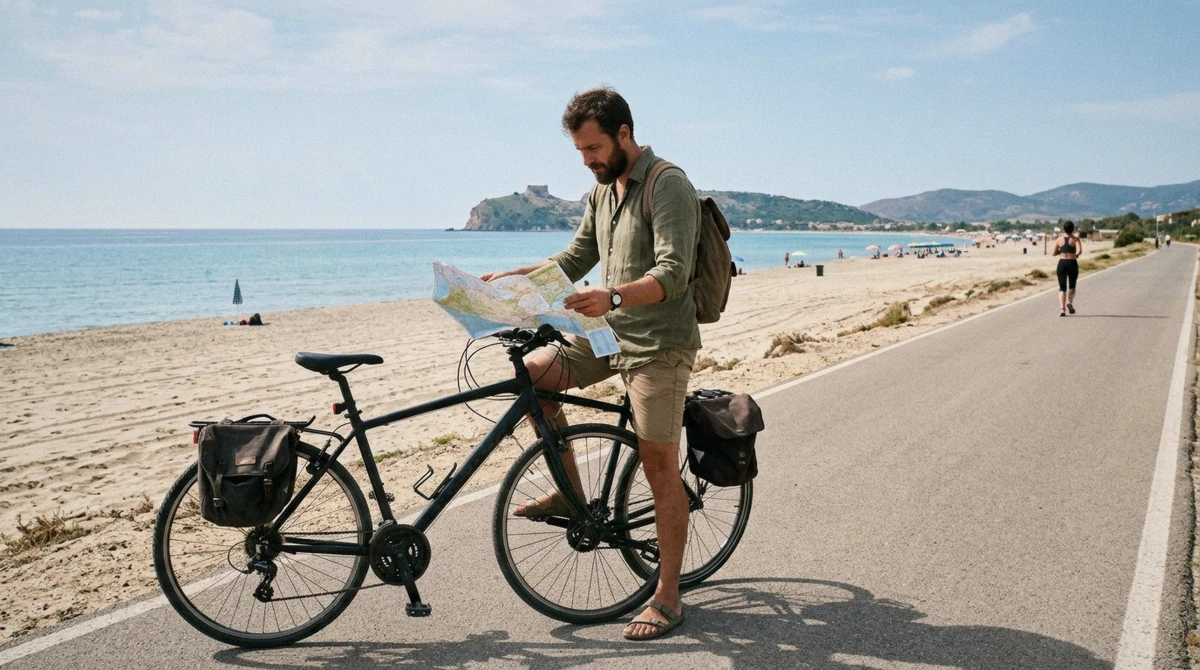
Quick answer
Independent riding works well across coastal Sardinia. Rent a hybrid for about €20 a day (about $23) or an e-bike for about €40 (about $46), ride the marked coastal and lagoon roads, and you need nothing else. A guided day earns its price on the mixed-surface mountain routes and when getting a decent bike to a distant trailhead is the actual problem.
Key takeaways
- Hybrid rental about €20 a day, road bike about €35 to €40, e-bike about €40, for typical rates
- The easiest independent riding is the flat Molentargius and Poetto path, the same ground as the two-hour lagoon ride at $52 (about €45)
- Guided days start at $52 and reach $116 (about €100) for the full-day Supramonte route, bike and helmet included
- Outside towns you must ride single file, and a reflective vest is required at night and in tunnels
- Pick the route before the bike: our route-by-route guide marks which roads need mixed-surface tyres
- Rental fleets run out in July and August, so book ahead if you are riding in high season
The Guided Benchmark
Useful as a price and effort comparison while you read: these are the days you would be replacing with a rental and your own planning.
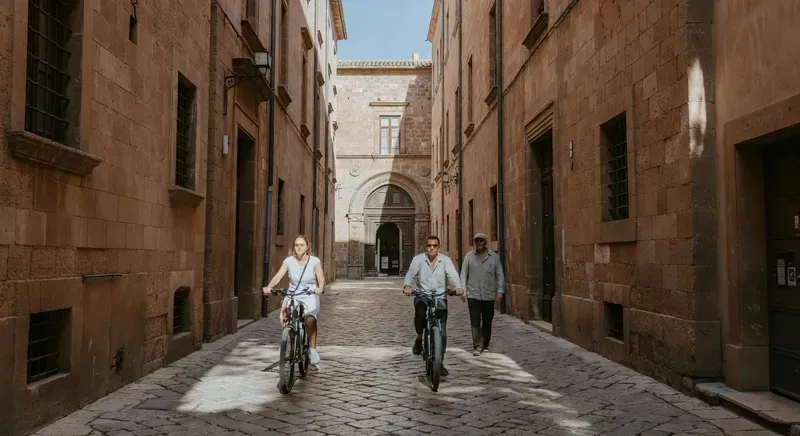 from $58
Cagliari: Old Town Guided E-Bike Tour
Discover Cagliari in a unique and eco-friendly way as you cycle through the city's four historic districts — Stampace, Castello, Villanova, and Marina — with an expert local…
- Cycle through Castello, Villanova, Stampace & Marina
- Expert guide — Cultural Tourism graduate since 2008
- Bike rental, water & coffee included
- Hotel pickup & drop-off included
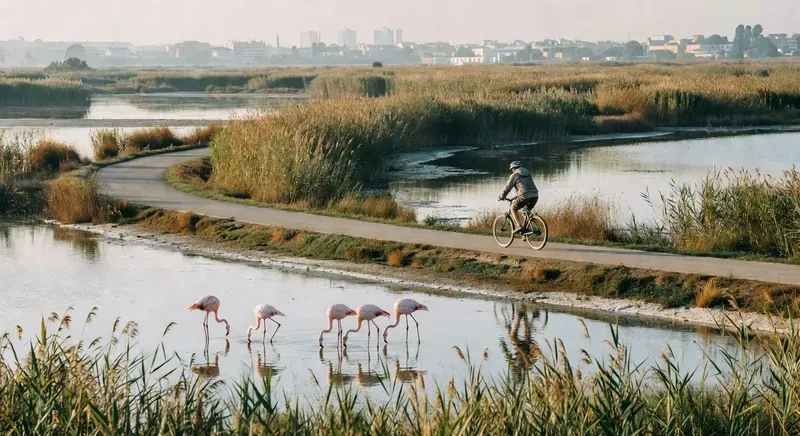 from $52
Cagliari: Bike Tour in the Flamingo Oasis
Pedal from Cagliari's marina to the Natural Park of Molentargius — an urban green oasis home to pink flamingos, herons, and rare bird species. Visit the Basilica of…
- Pink flamingos at Molentargius Natural Park
- Basilica of Bonaria & old salt ponds
- Bike & helmet rental included
- Mainly on dedicated cycle paths
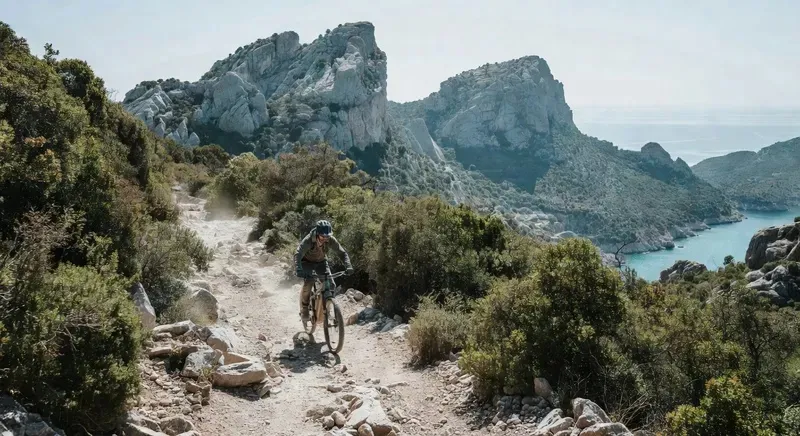 from $116
Cala Gonone & Dorgali Full-Day E-Bike Tour
A full-day e-bike adventure through some of Sardinia's most dramatic landscapes — from Cala Gonone through the wild Supramonte mountains, past the ancient Nuraghe Mannu archaeological site, into…
- Nuraghe Mannu archaeological site included
- Wild Supramonte mountain trails
- Vineyards, olive groves & hilltop Dorgali
- Premium Fantic XTF 1.5 Race e-bikes
The Short Answer: Do You Need a Guide?
No, not on most of the island. Nothing about cycling in Sardinia is restricted to guided groups: the roads are public, the Molentargius park is free to enter from dawn to dusk, and the coastal routes are ordinary provincial roads with ordinary traffic. If you can navigate a rental agreement and read a map, you can ride here independently.
The honest qualifier is that Sardinia is bigger and emptier than visitors expect. Long stretches of the best roads have no shop, no fountain and patchy phone coverage. Bars often close between one and five in the afternoon, so a plan built around a mid-ride coffee stop can fail.
Carry two bottles, start with food in your pockets, and treat a mechanical as something you will have to solve yourself.
Independent Riding and Guided Days Compared
| On your own | With a guide | |
|---|---|---|
| Cost per person, one day | €20 to €40 rental (about $23 to $46), plus food and transport | $52 to $116 (about €45 to €100), bike included |
| Route knowledge | Yours to research, and the gravel sections are not obvious on a map | Someone who has ridden it in every wind direction |
| Gear | Rental quality varies, helmet often extra at €5 to €10 | Bike, helmet and repair kit included |
| Backup | You fix the puncture and you find the way back | Support vehicle or guide with tools on most routes |
| Flexibility | Total. Change the plan mid-ride | Fixed route, fixed departure time |
| Best for | Coastal roads, city paths, riders with a week | Mountain and mixed-surface days, short trips, first visits |
The row that decides most trips is the last one. Independent riding wins on a week-long stay in one area, because the rental cost per day collapses across seven days. Guided riding wins on a short visit, where the bike logistics eat the day you were trying to save.
What Renting a Bike Actually Costs
Prices below are from a Cagliari rental shop and are typical for the island. Last typical local rates. Rates fall sharply per day once you go past three days, which is why a week-long rental is far better value than three separate day hires.
| Bike type | 2 days | 3 days | 7 days | Roughly per day |
|---|---|---|---|---|
| Hybrid or fitness bike | €40 (about $46) | €60 | €120 | about €20 (about $23) |
| Road bike | €70 to €80 | €105 to €120 | €240 (about $278) | about €35 to €40 |
| Gravel bike | €80 | €120 | €240 | about €40 |
| E-bike | €80 | €120 | €240 | about €40 (about $46) |
| E-road bike | €120 | €180 | €360 | about €60 |
Extras to expect: delivery within the Cagliari area around €20 each way, up to €100 for delivery an hour out; helmets, pedals and bike bags at €5 to €10 each. This particular shop asks for a minimum three-day rental and booking at least three days ahead, which is common among the better-equipped operators. Shorter city hires exist near Poetto and the park entrance at lower day rates, with less choice of bike.
- Book before you fly in July and August: good stock disappears
- Bring your own pedals and saddle if you are fussy, they travel in hand luggage
- Hotel loaner bikes are usually heavy and poorly maintained, fine for a beach spin and nothing more
Which Option Fits You
If you are staying a week in one area and ride regularly at home
rent for the week. The per-day cost drops to around €20 for a hybrid or €35 for a road bike, and you can chase the weather.
If you have two or three days and no bike logistics sorted
book a guided day or two. The rental minimums and delivery fees eat most of the saving anyway.
If you want the Supramonte, the Costa Verde or anything on mixed surfaces
go guided the first time. Navigation, not fitness, is what turns those days bad.
If you are riding flat lagoon and beach paths with family
rent locally by the day. There is nothing to solve and nothing to fear on that terrain.
If you are a confident rider who wants one big scenic day
rent a road bike and ride the coast road out of Alghero. It is the most rewarding independent day on the island.
Where Riding on Your Own Works Best
Four areas are genuinely easy to ride independently. The Molentargius and Poetto path in Cagliari is flat, free and traffic-free, and it is the place to start if you have not ridden abroad before. The SP17 coast road towards Villasimius is a straightforward out-and-back on good asphalt.
The Sinis Peninsula near Oristano is flat, quiet and full of lagoons, with the wind as its only complication. And the coast road between Alghero and Bosa is a public road that anyone with the fitness can simply ride.
The routes I would not take on alone the first time are the Supramonte behind Cala Gonone, where the surface changes without warning, and the Costa Verde, which is beautiful and genuinely remote. Full descriptions of all of them, with distances and climbing, are in our route-by-route guide, which owns that detail.
- Flat and easy: Molentargius and Poetto, Cagliari
- Straightforward road day: the SP17 towards Villasimius, or the SP105 north of Bosa
- Rolling and exposed: the Sinis Peninsula, ride out into the wind
- Leave for later: the Supramonte and the Costa Verde, unless you carry proper tools
What a Self-Guided Day Really Costs
A realistic independent day out of Cagliari: about €20 for the hybrid, or €40 for an e-bike, plus roughly €15 for lunch and water, and nothing else if you ride from town. Add €20 each way if you need the bike delivered. That puts a solo day somewhere between €35 and €80 (about $41 to $93), against $52 to $116 for a guided ride with the bike, the helmet and the route knowledge included.
The arithmetic changes with party size and trip length. For one rider on one day, the gap between renting and joining a guided ride is small enough that the guided day often wins on value. For two riders over a week, independent riding is clearly cheaper, and the full price comparison of the guided options sits in our 2026 price guide.
The Road Rules That Apply the Moment You Leave Town
Italian traffic law, article 182 of the Codice della Strada, sets a handful of rules that catch visiting cyclists out. Outside built-up areas you must ride single file. Riding two abreast is only permitted when one of the riders is under ten years old.
Enforcement is inconsistent, but on the narrow coastal roads it is also simply sensible.
The rule people genuinely do not know: a high-visibility reflective vest or braces is required outside built-up areas from half an hour after sunset until half an hour before sunrise, and in tunnels at any time of day. Tunnels matter here, because several coastal roads run through them. A vest weighs nothing and packs to the size of a fist, so carry one even for a day ride.
- Single file outside towns, always
- Reflective vest at night outside built-up areas and in every tunnel
- Front white light and rear red light after dusk
- Pedal-assist e-bikes must be limited to 250 W with assistance cutting out at 25 km/h; anything faster is legally a moped and needs a plate, insurance and a licence
- Helmets are not legally required for adults on bicycles, though every guided ride here provides and requires one
When a Guided Ride Is Genuinely Worth It
Three situations, all of them practical rather than sentimental. The first is mixed-surface ground, where the full-day Cala Gonone and Dorgali route at $116 (about €100) covers 45 to 70 km of Supramonte trails that would take a visitor a full day of research to plan and a good map-reading day to execute. The second is time: on a two-day visit, the delivery fees and rental minimums cancel out most of the saving.
The third is the bike itself, since a well-maintained e-bike with the right tyres for the route is exactly what rental fleets run out of first.
A guide also solves the small things that spoil independent days: which of three climbs to take with today's wind, where the water actually is, and which bar is open at two in the afternoon. If that appeals, our guided cycling day trips across Sardinia all include the bike and the helmet.
Getting Around the Island With a Bike
Three airports serve the island: Cagliari Elmas in the south, Olbia Costa Smeralda in the north-east and Alghero in the north-west. Pick the one nearest your riding, because the drive from Cagliari to Alghero is around four hours and nobody wants to start a cycling holiday with that.
Regional trains link the main towns and ports and do carry bicycles, and folding bikes travel free. Bike-carriage rules vary by region in Italy and Sardinia is handled differently from the national scheme, so check the current terms on the Trenitalia bike page before you plan a train-assisted route rather than assuming a fixed fee. Ferries from Civitavecchia, Livorno, Naples and Palermo reach Olbia, Golfo Aranci, Porto Torres and Cagliari, and each operator sets its own bicycle terms.
A Simple Independent Day From Cagliari
The day I would give a first-time visitor with a rented hybrid, no support and no desire to suffer.
-
07:30
Collect the bike
Pick up near Poetto or in the centre, check tyre pressure and the saddle height before you leave the shop.
-
08:00
Ride the lagoon loop
Into Molentargius park while the light is low and the flamingos are feeding. Free entry, flat, no traffic.
-
09:30
Along Poetto
About 8 km of seafront path with a coffee stop at the far end near Marina Piccola.
-
10:30
Onto the SP17
Head east towards Torre delle Stelle as far as your legs are happy, then turn around. There is no obligation to reach Villasimius.
-
13:00
Back in town
Lunch before the bars close for the afternoon, then the bike back or a swim, in either order.
Frequently Asked Questions
How much does it cost to rent a bike in Sardinia?
About €20 a day (roughly $23) for a hybrid, €35 to €40 for a road bike and about €40 for an e-bike, based on typical Cagliari rental shop rates. Weekly hire is far better value: €120 for a hybrid and €240 for a road bike or e-bike. Expect helmets and pedals to be charged separately at €5 to €10.
Where can you cycle in Sardinia without a guide?
The Molentargius and Poetto paths in Cagliari, the SP17 coast road towards Villasimius, the flat Sinis Peninsula and the coast road between Alghero and Bosa. All are public roads or free-access parks. The mountain and gravel ground behind Cala Gonone and on the Costa Verde is where independent riding gets genuinely demanding.
What are the cycling laws in Italy?
Ride single file outside built-up areas, wear a reflective vest at night outside towns and in tunnels, and use a white front light and red rear light after dusk. Pedal-assist e-bikes must cut assistance at 25 km/h with a motor no larger than 250 W. Helmets are not legally required for adults, although every guided ride provides one.
When is a guided ride worth the extra money?
On mixed-surface mountain routes, on short trips where rental minimums and delivery fees cancel the saving, and when you want a well-maintained e-bike at a trailhead two hours from the airport. On flat coastal and city riding over several days, renting is clearly cheaper.
How do you take a bike on trains in Sardinia?
Regional trains carry bicycles and folding bikes travel free. Italy's bike-carriage rules differ by region and Sardinia sits outside the standard national supplement scheme, so check the current terms on Trenitalia's own bike page rather than budgeting a fixed fee.
What should you carry on an independent ride here?
Two full bottles, food for the whole ride, a tube and pump, and a reflective vest. Bars commonly close between one and five in the afternoon and fountains are scarce on the coastal roads, so the ride has to be self-sufficient between towns.