Best Time to Cycle in Sardinia: A Month-by-Month Riding Guide
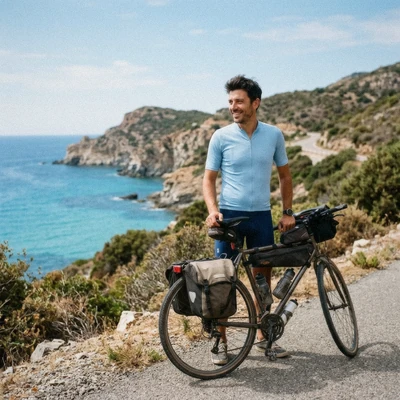
The best time to cycle in Sardinia is April to June and September to October, when daytime highs sit between 20 and 28 degrees, the roads are quiet and the light lasts. July and August are not impossible, but August averages a high of 32.0 degrees in Cagliari and the coastal roads fill with holiday traffic, so riding shrinks to the first hours after sunrise. Winter is milder than most northern Europeans expect and perfectly rideable on the coast, with the caveat that it is also the wettest part of the year. I have ridden here in every month except February, and the differences between them are bigger than the temperature table alone suggests. Prices below use a rate of about 1 euro to 1.16 dollars in current rates.
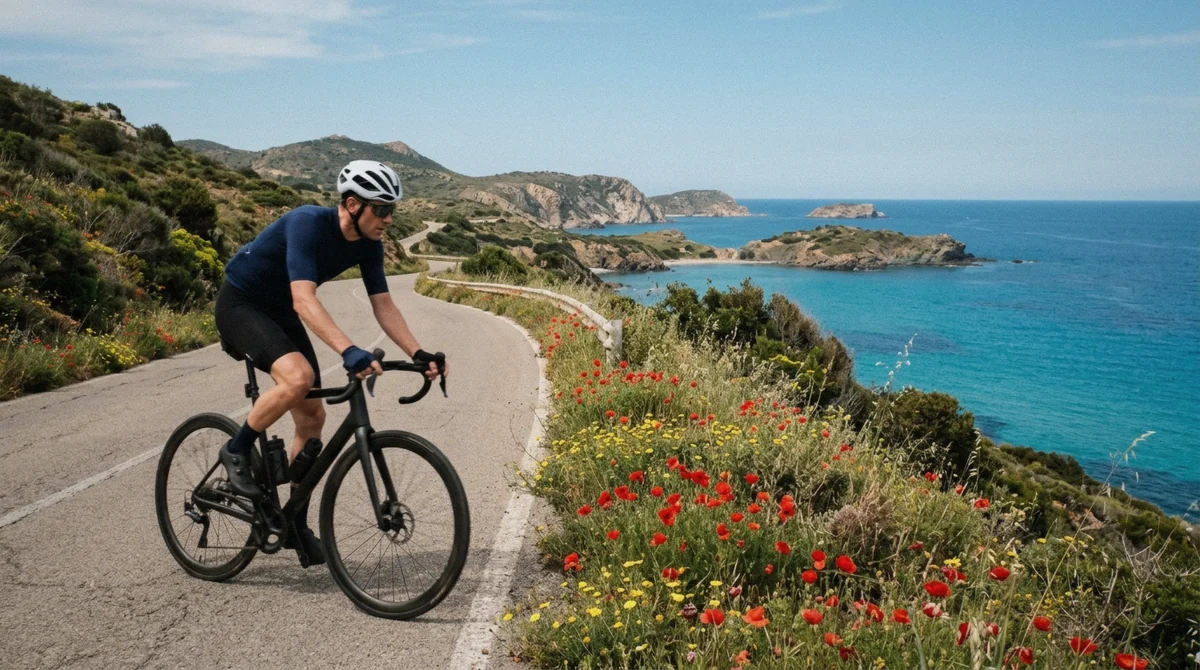
Quick answer
Ride Sardinia between April and June or between September and October. Those are the months when temperatures sit in the low-to-mid twenties, rainfall is low, and the coastal roads are not carrying holiday traffic. September is the single strongest month of the year: warm, dry, and quiet from the middle of the month onward.
Key takeaways
- Best overall: April to June and September to October, highs of 20 to 28 degrees
- Hottest: August, averaging a high of 32.0 degrees, so ride before nine in the morning or not at all
- Driest: July, with about 3 mm of rain across the whole month
- Long mountain days like the full-day Cala Gonone ride at $116 (about €100) are best kept to spring and autumn
- City rides such as the two-hour old town circuit work year-round, including winter
- Wind, not rain, is the planning factor here; the west-coast routes in our route-by-route guide are the exposed ones
Rides That Suit the Shoulder Seasons
These three are the ones I would book in April, May, September or October, when the temperature makes a long day in the saddle a pleasure rather than an endurance test.
 from $116
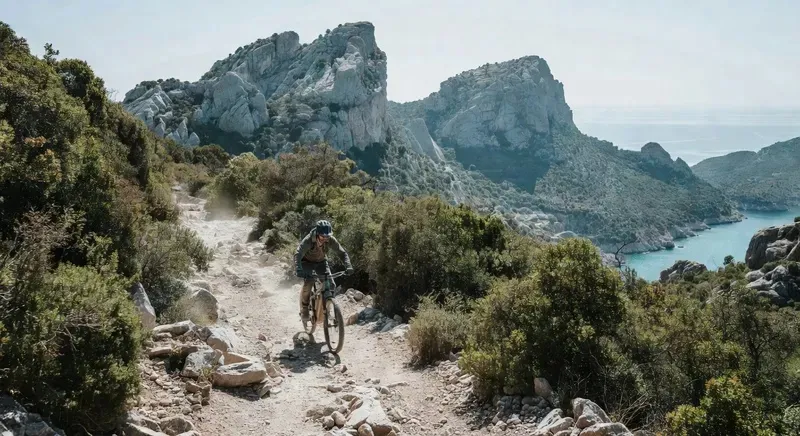
Cala Gonone & Dorgali Full-Day E-Bike Tour
A full-day e-bike adventure through some of Sardinia's most dramatic landscapes — from Cala Gonone through the wild Supramonte mountains, past the ancient Nuraghe Mannu archaeological site, into…
- Nuraghe Mannu archaeological site included
- Wild Supramonte mountain trails
- Vineyards, olive groves & hilltop Dorgali
- Premium Fantic XTF 1.5 Race e-bikes
 from $110
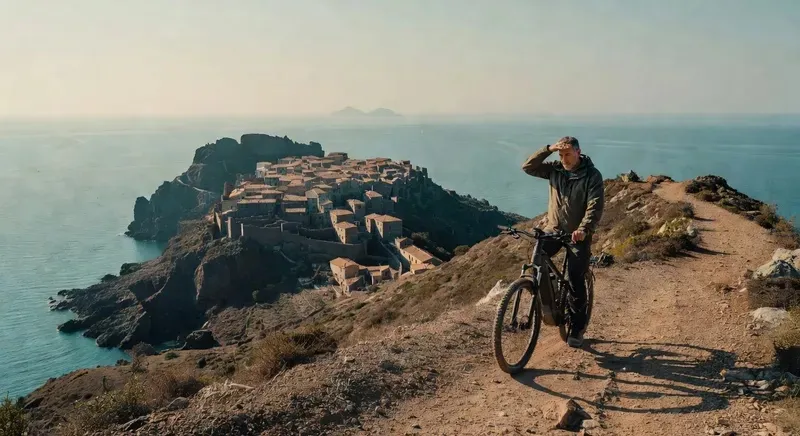
Castelsardo: Panoramic E-Bike Tour
Set off from Castelsardo — a pearl of northern Sardinia — and climb by e-bike to the summit of Monte Ossoni for sweeping views of the crystal-clear coast…
- Summit of Monte Ossoni — panoramic 360° views
- Roccia dell'Elefante & Paddaggiu nuraghe
- 30 km route, 700 m elevation gain
- Helmet & tyre repair kit included
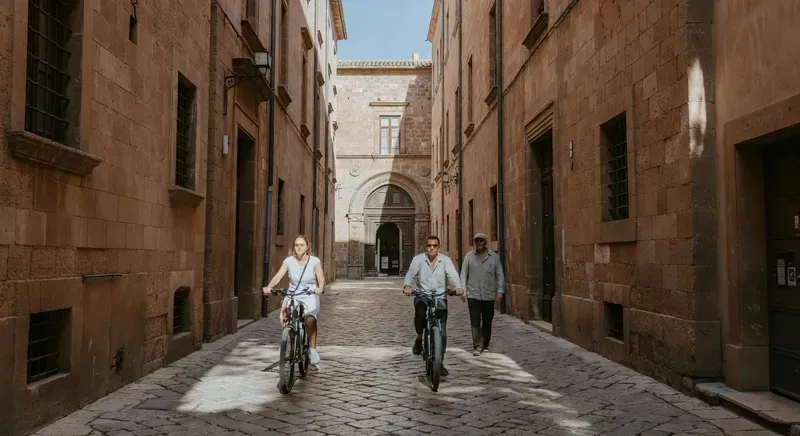 from $58
Cagliari: Old Town Guided E-Bike Tour
Discover Cagliari in a unique and eco-friendly way as you cycle through the city's four historic districts — Stampace, Castello, Villanova, and Marina — with an expert local…
- Cycle through Castello, Villanova, Stampace & Marina
- Expert guide — Cultural Tourism graduate since 2008
- Bike rental, water & coffee included
- Hotel pickup & drop-off included
The Seasons at a Glance
| Season | Weather | Wind and heat | Crowds | Verdict |
|---|---|---|---|---|
| Spring (March to June) | Mild and greening, showers early on | Maestrale still frequent in March and April | Light until June | Best overall, with wildflowers |
| Summer (July and August) | Hot and almost rainless | Heat is the limit, not wind | Peak, especially August | Ride at dawn or head inland |
| Autumn (September and October) | Warm days, warm sea, first rains in October | Calmer than spring on average | Thins out after mid-September | The connoisseur's window |
| Winter (November to February) | Mild on the coast, wet | Wettest months of the year | Almost none | City and lagoon riding only |
One thing that surprises visitors: Sardinia is dry. Cagliari records about 448 mm of rain a year, which makes it one of Italy's driest cities, and almost all of it falls between October and January. A rainy day on a spring ride is a genuine outlier rather than a risk you plan around.
Spring: March to June
March is the transition month. Highs sit around 17 degrees, the interior is green from the winter rains and the roads are empty, but the maestrale still blows through regularly and the sea is at its coldest, around 14 degrees, so a wet-weather layer is not optional. April lifts highs to 20.0 degrees with about six rainy days across the month, and this is when the verges fill with poppies and asphodel.
May is the month I would pick if someone asked for one: highs of 24.0 degrees, nine hours of sun a day, only about four rainy days and 25 mm of rain in total.
June is the last comfortable month for a full day out. Highs reach 28.6 degrees, rain effectively stops at around 10 mm, and there are ten and a half hours of sun. Roads are still reasonable until the last week, when the summer season starts moving.
- March and April: pack a windproof layer, the descents are cold and the maestrale is still active
- May: the strongest all-round month for long routes and mountain days
- June: start early, finish by two in the afternoon, and the heat never becomes an issue
Summer: July and August
This is the honest section. July averages a high of 31.6 degrees with about 3 mm of rain across the entire month and eleven hours of sun a day. August is hotter still at 32.0 degrees.
Those are the averages, not the peaks. On the coast the sea breeze takes the edge off and the water is at 24.5 to 25.5 degrees, which makes a post-ride swim genuinely restorative, but a 60 km day in the middle of the afternoon in August is not a holiday, it is a test.
What works in summer: two-hour city and lagoon rides in the first slot of the morning, and the interior. The Gennargentu runs several degrees cooler than the coast and its climbs sit in cork oak shade for long stretches. What does not work: the long coastal routes, which combine full sun, no shade, no water and, in August, holiday traffic on every beach road.
- Ride between six and nine in the morning, then stop
- Carry two bottles: fountains are scarce and bars often close between one and five
- August is the Italian holiday peak, so book accommodation and rental bikes well ahead
Autumn: September and October
September is the month locals ride. Highs come down to 28.0 degrees, the sea is still at 24 degrees after a summer of warming, there are eight hours of sun a day and only about four rainy days. From the middle of the month, when Italian schools go back, the coastal roads empty out almost overnight.
October keeps highs at 24.1 degrees but the rain returns properly, about 55 mm across six days, and the light gets shorter. Both months are excellent; September is the one I would book.
Autumn also changes the interior. The oak and chestnut woods of the Barbagia turn colour through October, which is the one thing spring cannot offer, and the grape and olive harvests mean the villages are busy in a working rather than touristic way.
Winter: November to February
Winter riding here is a real option and almost nobody does it. Highs stay between 14.7 and 19.1 degrees, which is jersey-and-arm-warmers weather rather than winter kit, and the roads are yours. The trade is rain: November, December and January each bring around 45 to 55 mm across roughly eight rainy days, and daylight drops to four or five hours of sun.
Mountain routes are out, the higher Gennargentu can hold snow, and some seasonal services close. City rides, the lagoons and the flatter coastal roads all still work.
Temperatures and Rainfall, Month by Month
Figures below are climate normals for Cagliari, published by Climates to Travel. The north of the island runs a degree or two cooler and the interior cooler again, particularly at night.
| Month | Average low | Average high | Rain | Rainy days | Sea |
|---|---|---|---|---|---|
| January | 5.5 °C | 14.7 °C | 45 mm | 8 | 15 °C |
| February | 5.4 °C | 15.1 °C | 55 mm | 8 | 14 °C |
| March | 7.4 °C | 17.4 °C | 45 mm | 7 | 14 °C |
| April | 9.8 °C | 20.0 °C | 35 mm | 6 | 15.5 °C |
| May | 13.3 °C | 24.0 °C | 25 mm | 4 | 18 °C |
| June | 17.3 °C | 28.6 °C | 10 mm | 2 | 21.5 °C |
| July | 20.0 °C | 31.6 °C | 3 mm | 1 | 24.5 °C |
| August | 20.4 °C | 32.0 °C | 10 mm | 1 | 25.5 °C |
| September | 17.6 °C | 28.0 °C | 30 mm | 4 | 24 °C |
| October | 14.5 °C | 24.1 °C | 55 mm | 6 | 22 °C |
| November | 10.2 °C | 19.1 °C | 55 mm | 8 | 19 °C |
| December | 6.9 °C | 15.7 °C | 55 mm | 8 | 16.5 °C |
Read the rainy-days column rather than the millimetres. Sardinian rain arrives as short heavy bursts, so eight rainy days in November does not mean eight ruined rides, it means eight days where an hour of the afternoon might be wet. Source: Climates to Travel.
What Actually Affects Conditions: the Maestrale
Temperature decides whether a ride is comfortable. The maestrale decides whether it is hard. This is the northwest wind that dominates Sardinian weather, and on its strongest days it can exceed 100 km/h, typically setting in for several days at a stretch rather than gusting for an afternoon.
It hits the west coast hardest, which is precisely where the most photogenic riding is.
Practically, that means three things. Check the wind forecast before the direction of your route, not after. Ride out into a headwind and home with it, especially on exposed sections like the Sinis.
And when the maestrale is genuinely up, move to the east coast or inland for the day rather than persisting, because a strong crosswind on a cliff road is the one condition on this island I treat as a stop sign.
- West coast, from Alghero down to the Costa Verde: most exposed
- East coast around Cala Gonone and the Supramonte: sheltered on maestrale days
- Cagliari and the southern lagoons: exposed but low consequence, being flat and close to town
Which Season Suits Which Rider
If you want the long mountain days and the biggest distances
May, September or early October, when you get the heat window and the daylight together.
If you are travelling with children or riding casually
April, May or late September, when a two-hour ride never becomes a sun-exposure problem.
If you care most about photographs and green landscape
April, when the wildflowers are out along the verges and the interior is still green.
If your dates are locked to July or August
ride the first slot after sunrise, or head to the Gennargentu where the air is cooler.
If you want empty roads and the lowest prices
November through February on the coast, accepting rain and short days in return.
Crowds, Prices and the August Problem
The island's tourism has one enormous spike. August is when Italy takes its holidays, and Sardinia is where a good share of them come. Accommodation costs peak, coastal roads carry beach traffic from mid-morning, and rental bike stock runs out.
The change in mid-September is dramatic: the same road that was a queue in August is empty on a Tuesday morning three weeks later, with the sea still at 24 degrees.
Guided ride prices themselves are fairly stable across the year, running from $52 to $116 (about €45 to €100) per person depending on length, and the full breakdown of what moves them sits in our 2026 price guide. What genuinely changes with the season is everything around the ride: flights, beds and whether you can get the bike you want.
So, When Should You Go?
Book September if you can. Warm, dry, quiet after the first fortnight, and the sea is still swimmable at the end of a hot ride. Book May if September does not work: slightly cooler, greener, with the wildflowers and the longest evenings of the good season.
Take April or October as the budget-friendly runners-up, accepting a higher chance of a wet afternoon. Avoid August unless you are prepared to redesign the trip around dawn starts. Whichever window you land in, our guided e-bike day rides in Sardinia run through the whole season, and what you should have in your jersey pockets changes with the month, which our season-by-season kit list covers.
Frequently Asked Questions
What is the hottest month for cycling in Sardinia?
August, with an average high of 32.0 degrees in Cagliari and almost no rain to break it. July is barely cooler at 31.6 degrees. In both months, riding is a dawn activity on the coast, or an inland activity in the Gennargentu where the air is several degrees cooler.
When is the cheapest time for a cycling trip to Sardinia?
November through March, when flights and accommodation are at their lowest and the coastal roads are empty. The trade is rain, roughly 45 to 55 mm a month across about eight rainy days, and short daylight. Guided ride prices themselves move very little across the year.
How windy does it get for cyclists in Sardinia?
The maestrale, the northwest wind, is the one that matters. On its strongest days it exceeds 100 km/h and it tends to settle in for several days rather than passing through in an afternoon. The west coast takes the worst of it, so on those days riders move to the east coast or inland.
Which months should riders avoid in Sardinia?
August above all, for heat and holiday traffic together. December and January are the wettest months with the least daylight, though the coast stays mild at highs near 15 degrees, so a city ride in January is more pleasant than most people expect.
What time of day should you ride in summer?
Between six and nine in the morning. The air is still in the low twenties, the roads are empty before the beach traffic, and you are finished before the sun has any real force. Late-afternoon rides work in September and October but not in July or August, when the stored heat keeps evening temperatures high.
Can you cycle in Sardinia in winter?
On the coast, yes. Highs run between 14.7 and 19.1 degrees from November to February, which is comfortable riding weather with a light layer. Mountain routes are the exception, since the higher Gennargentu can hold snow and some seasonal services close for the winter.