The 8 Best Cycling Routes in Sardinia: Ride Notes From the Island
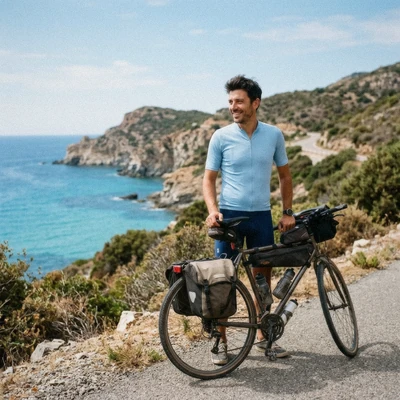
The best cycling routes in Sardinia range from the flat, family-friendly Poetto seafront in Cagliari to the demanding Alghero to Bosa coast road, the island's most photographed stretch of asphalt and the one most riders ask about first. I have pedalled every road on this list more than once, most of them dozens of times, and I keep coming back to the same eight: two flat city routes for anyone easing in, three coastal roads that reward real fitness, and three routes into wilder ground for riders who want climbs, gravel or genuine solitude. Some of these you can ride on a rented hybrid straight off the ferry. Others make more sense with a guide who knows where the tarmac turns to loose stone and where the wind will hit hardest. Below is the full list, a route map, and honest notes on which is which.
Quick answer
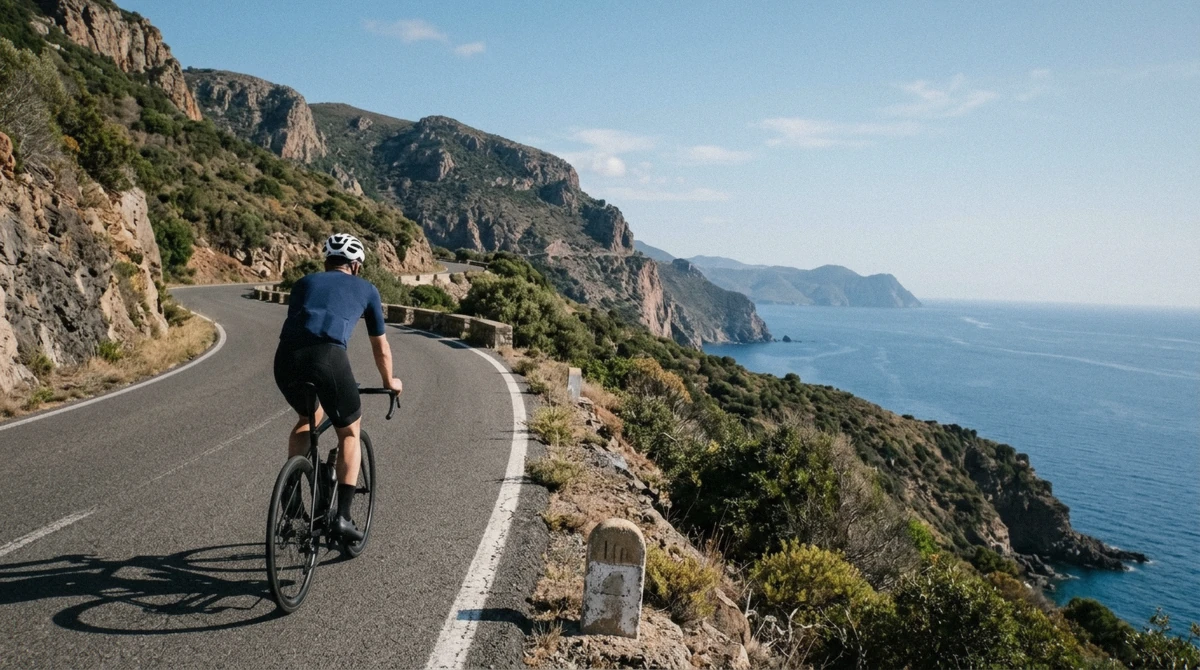
The signature ride on this list is the Alghero to Bosa coast road (SP105), a 45 km stretch of cliffside asphalt that most competitors and locals alike call the best cycling road on the island. It suits fit riders; the flat Poetto and Molentargius loop in Cagliari is the better pick for anyone easing in or riding with kids.
Key takeaways
- Alghero to Bosa (SP105) is the signature road: 45 km one-way with repeated climbs to 300 to 400 m above the sea
- Flattest and easiest: the Poetto and Molentargius loop in Cagliari, the terrain behind the flamingo oasis bike tour
- Best full day out on an e-bike: Cala Gonone to Dorgali and the Supramonte, the ground covered by the Cala Gonone e-bike tour
- Quietest riding months are spring and autumn, detailed in our best-time guide
- Wildest and remotest: the Gennargentu interior, climbing toward Punta La Marmora at 1,834 m, Sardinia's highest point
- Most exposed to wind: the west-coast routes through Alghero, Bosa, Sinis and the Costa Verde, all in the path of the maestrale
Tours That Cover These Routes
Three of the eight routes below are also guided e-bike days, useful if you would rather ride with a mechanic, a support plan and local knowledge than figure out the gravel sections alone.
 from $52
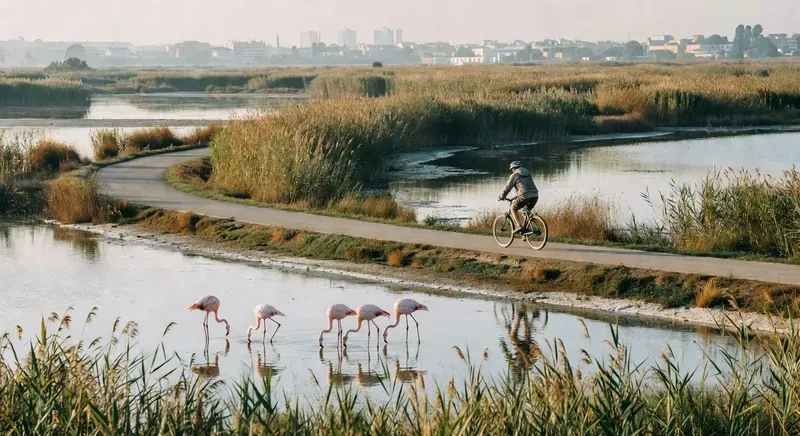
Cagliari: Bike Tour in the Flamingo Oasis
Pedal from Cagliari's marina to the Natural Park of Molentargius — an urban green oasis home to pink flamingos, herons, and rare bird species. Visit the Basilica of…
- Pink flamingos at Molentargius Natural Park
- Basilica of Bonaria & old salt ponds
- Bike & helmet rental included
- Mainly on dedicated cycle paths
 from $116
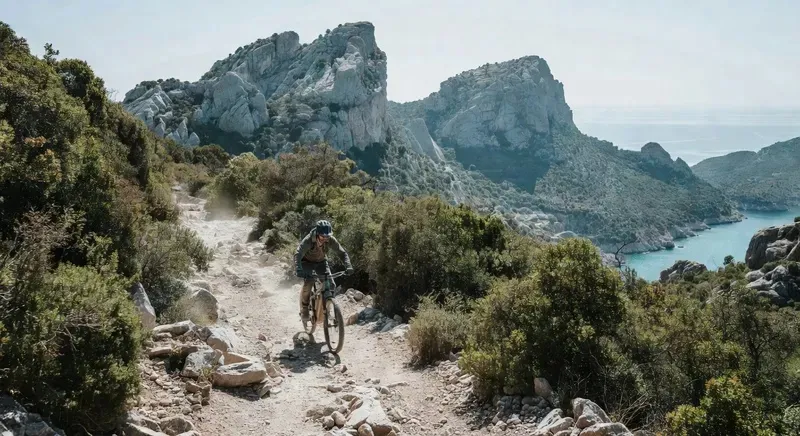
Cala Gonone & Dorgali Full-Day E-Bike Tour
A full-day e-bike adventure through some of Sardinia's most dramatic landscapes — from Cala Gonone through the wild Supramonte mountains, past the ancient Nuraghe Mannu archaeological site, into…
- Nuraghe Mannu archaeological site included
- Wild Supramonte mountain trails
- Vineyards, olive groves & hilltop Dorgali
- Premium Fantic XTF 1.5 Race e-bikes
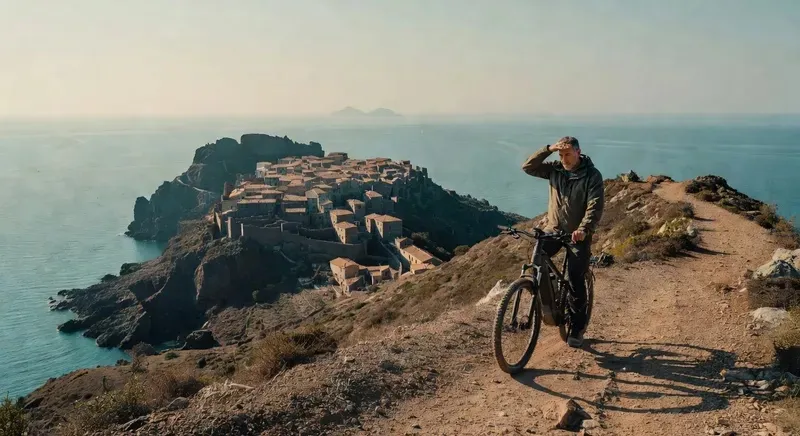 from $110
Castelsardo: Panoramic E-Bike Tour
Set off from Castelsardo — a pearl of northern Sardinia — and climb by e-bike to the summit of Monte Ossoni for sweeping views of the crystal-clear coast…
- Summit of Monte Ossoni — panoramic 360° views
- Roccia dell'Elefante & Paddaggiu nuraghe
- 30 km route, 700 m elevation gain
- Helmet & tyre repair kit included
Routes at a Glance
Difficulty here means sustained effort and terrain, not just distance; a flat 45 km day and a hilly 30 km day can feel completely different by the finish.
| Route | Distance | Climbing | Difficulty | Best for |
|---|---|---|---|---|
| Alghero to Bosa (SP105) | 45 km one-way (about 68 km on the longer loop) | Repeated climbs to 300-400 m | Hard | Fit riders chasing the classic coast road |
| Cagliari to Villasimius (SP17) | About 45 km | Climbs to about 159 m past Torre di Capo Boi | Moderate | Road cyclists who want a Giro-tested route |
| Poetto and Molentargius loop | About 8 km of beachfront path plus the park loop | Flat | Easy | Families, beginners, an evening spin |
| Cala Gonone to Dorgali and the Supramonte | 45 to 70 km | Sustained climbing on limestone plateau roads and gravel | Hard | E-bike riders wanting a full wild day |
| Castelsardo and Monte Ossoni | 30 km loop | 700 m elevation gain | Moderate to hard | E-bike riders chasing a summit view |
| Sinis Peninsula | Flexible, flat to rolling | Minimal | Easy | Families, on calm-wind days |
| Costa Verde | Remote, loop length depends on route chosen | Rolling, mixed surface | Hard, experienced riders only | Riders who want empty roads and dunes |
| Gennargentu and Barbagia | Varies by loop chosen | Long mountain climbs | Hard | Climbers and cooler-air summer riding |
The three easiest routes on this table, Poetto and Molentargius, Sinis, and the flatter stretches of the SP17, are entirely fine on a basic rental bike. The three hardest, the SP105, Cala Gonone and the Costa Verde, reward either strong fitness or an e-bike.
Which Route Fits You
If you're new to Sardinia or riding with kids
the Poetto and Molentargius loop, flat, car-free and forgiving of a slow pace.
If you want the single most scenic ride on the island
the Alghero to Bosa coast road (SP105), 45 km of cliffside asphalt and the island's best-known ride.
If you're on an e-bike and want a full day out
Cala Gonone to Dorgali and the Supramonte, the terrain the full-day e-bike tour covers.
If you want climbing without crowds
the Castelsardo loop to Monte Ossoni, 700 m of gain spread across 30 km.
If you want the emptiest roads on the island
the Costa Verde or the Gennargentu interior, both remote and best tackled with local knowledge or a rented gravel bike and a full water bottle.
Where These Routes Sit
Ten reference points across the island: the start or heart of each of the eight routes above, plus two waypoints along the Cagliari to Villasimius road.
1. Alghero to Bosa (SP105)
The SP105 coast road between Alghero and Bosa is the ride most visitors ask about before they ask about anything else, and for good reason. It runs about 45 km one-way along cliffs that drop straight into the sea, climbing repeatedly to somewhere between 300 and 400 m above the water rather than one single pass, so the effort adds up in doses rather than all at once. Riders who turn it into a loop rather than an out-and-back typically add the inland leg through Villanova Monteleone, pushing the total closer to 68 km and 1,400 m of cumulative climbing.
What makes the SP105 more than just a scenic drive on two wheels is what lives on the cliffs themselves. The stretch between Bosa and Alghero holds Sardinia's only breeding colony of griffon vultures, roughly 120 territorial pairs split between the Bosa side and a smaller group near Alghero, according to the most recent Vulture Conservation Foundation census. It is one of the few places in Italy where you can watch a bird with a nearly three-metre wingspan ride the same thermals you are fighting against on the climbs.
Italia.it lists the road among its official coastal cycling routes, and it shows: the surface is good, the traffic is light outside August, and there is nowhere on the island with a longer, cleaner run of sea on one side of the handlebars. Most riders return the way they came rather than looping inland, since the coast road is the whole point of the ride.
2. Cagliari to Villasimius (SP17)
The SP17 out of Cagliari toward Villasimius is the road cyclist's route, the one that has actually hosted professional racing: the Giro d'Italia used this coast in both 2007 and 2017, and the reason becomes obvious once you're on it. The route runs through Torre delle Stelle and Solanas, about 45 km from Cagliari to Villasimius, and after Solanas the road climbs to roughly 159 m past the Torre di Capo Boi watchtower, the one sustained effort on an otherwise rolling coastal profile.
Solanas sits about 7 km from Torre delle Stelle, with Villasimius a further 18 km on, so the route breaks naturally into three legs if you want to split it with a coffee stop or a swim. The tarmac is good throughout and the views over the Golfo di Carbonara rank with anything on the island, without the crowds the SP105 picks up on a summer afternoon.
This is the route to choose if you want to feel like you are riding a real stage rather than a tourist loop. It rewards a road bike over a hybrid, and riders who want the climb without the crowds tend to start early, before the beach traffic from Cagliari builds through Torre delle Stelle.
3. Poetto and Molentargius Loop
This is where most people in Cagliari actually ride, and where I send anyone who wants their first pedal stroke in Sardinia to be an easy one. A dedicated cycle path runs the length of Poetto beach, roughly 8 km of flat, car-free tarmac with the sea on one side the whole way, and it connects directly into the Molentargius-Saline Regional Natural Park, one of Europe's most important wetlands and home to flamingos year-round. Entry to Molentargius is free and the park is open from dawn to dusk, no ticket, no booking.
There is no climbing to speak of and no technical riding, which makes this the loop for a first evening in the city, a rest day between harder rides, or a family outing with kids on rented hybrids. It is also the terrain of two of the guided tours on this site, the flamingo oasis bike tour and the bike and hike route that adds a walk up to the Sella del Diavolo at the end. Bars along Poetto close for the afternoon like everywhere else on the island, so carry water if you are riding through midday.
4. Cala Gonone, Dorgali and the Supramonte
The east coast around Cala Gonone is the wildest riding on this list and the one route I would not attempt without an e-bike or a genuinely strong set of legs. Day rides here run 45 to 70 km across the limestone Supramonte plateau, a mix of paved lanes and gravel tracks that climbs steadily into terrain with almost no traffic and almost no shade. The full-day guided e-bike tour covers this ground on Fantic XTF 1.5 Race e-bikes, with a stop at the Nuraghe Mannu archaeological site above the Gulf of Orosei along the way. Our full review of the Cala Gonone e-bike day covers what a day like this actually feels like, mile by mile.
What makes the Supramonte worth the effort is the contrast: limestone cliffs and karst plateau one hour, hilltop Dorgali and its vineyards and olive groves the next, then a final descent to a swim at Cala Cartoe or Cala Fuili to finish. It is not a route to freestyle on a rented hybrid with no support, the gravel sections and the distance from any town punish a mechanical problem more than anywhere else on this list. This is the one route on this page where I would tell most riders, guided beats solo, not out of caution for its own sake but because the terrain genuinely rewards local knowledge of which trail actually leads back to the coast.
5. Castelsardo and Monte Ossoni
Castelsardo, a walled town on the north coast, is the start point for a 30 km loop that climbs 700 m to the summit of Monte Ossoni, where the road opens onto a 360-degree view over the Gulf of Asinara. The panoramic e-bike tour rides this loop with pedal assist doing most of the work on the steeper sections, past the Roccia dell'Elefante, a wind-carved rock formation that has been a local landmark for centuries, and out onto quiet paved and dirt roads that see almost no traffic outside the town itself. The full write-up of the Castelsardo e-bike tour has the complete inclusions list and photos from the ride.
Unguided, this is a genuinely rideable loop for anyone comfortable on a gravel or hybrid bike with real gears, the 700 m of gain is spread across the whole 30 km rather than concentrated on one wall of a climb. What a guide adds here is mostly the summit-day judgment call, whether the wind on top is worth the last push or better saved for a calmer morning, and a tyre repair kit if the dirt sections find a sharp stone.
6. Sinis Peninsula
West of Oristano, the Sinis Peninsula trades cliffs for lagoons and dune-backed beaches, flat to rolling terrain that works for families and for anyone who rode the SP105 the day before and wants their legs back. The loop through San Giovanni di Sinis passes the Tharros ruins, a Phoenician and Roman site sitting right on the coast, easy to combine with a swim stop since the whole peninsula sits so close to the water.
The one thing to plan around here is wind. Sinis sits fully exposed on Sardinia's west coast, in the direct path of the maestrale, and on a strong-wind day the peninsula's flat, open ground offers nowhere to hide from it the way a tree-lined inland road would. Check the forecast the morning of, not the night before, and be ready to swap this ride for a sheltered east-coast route if the wind is already up by breakfast.
7. Costa Verde
The Costa Verde, southwest of Cagliari, is the route for riders who have already done the postcard roads and want something rougher. This is a former mining coast, remote and largely unserviced, with rough and sometimes gravel sections that see very little traffic of any kind. The Piscinas dunes, among the tallest sand dunes in Europe, rise directly off the road partway along, an odd and genuinely striking sight on a Mediterranean island.
I would not send a first-time visitor here without local knowledge of which tracks actually connect and which dead-end at a mine shaft or a locked gate. Bring more water than you think you need, there is nowhere reliable to refill between towns, and treat this as a route for confident, self-sufficient riders rather than a casual afternoon out.
8. Gennargentu and Barbagia
Sardinia's interior climbs to Punta La Marmora, at 1,834 m the highest point on the island, and the roads through the Gennargentu massif and the Barbagia region around it are the closest thing here to genuine mountain cycling. Stone villages dot the climbs, Fonni among them, Sardinia's highest village at around 1,000 m, and the air stays noticeably cooler than the coast even in the middle of August, which makes this the interior's best answer to a heat wave.
These are long climbs by Sardinian standards, and the reward is a kind of riding that has nothing to do with the beach at all: pine forest, granite outcrops, and villages that still run on a slower, more local rhythm than the coast. It is not a route for a first day on the island, but for anyone spending a week or more, it is worth one full day away from the sea.
Riding These Routes Guided or on Your Own
Three of the eight routes above, Poetto and Molentargius, Cala Gonone and the Supramonte, and Castelsardo and Monte Ossoni, are also run as guided bike day tours in Sardinia, with a bike, a guide and a support plan built in. The other five, the SP105, the SP17, Sinis, Costa Verde and the Gennargentu, are entirely open to anyone on a rented or private bike, no permit or booking required.
Whether that is the right call depends more on the specific route than on any general rule. The flat city loop and the Castelsardo circuit are genuinely fine to ride alone on a rented hybrid or gravel bike, well-marked and forgiving of a wrong turn. The Supramonte and the Costa Verde are a different proposition, remote, mixed-surface and unforgiving of a flat tyre with no support vehicle behind you. Our full breakdown of renting, rules and real costs walks through exactly what solo riding looks like on each type of terrain, including what a day actually costs once you add up the bike, the delivery fee and the water you will need.
Bike choice follows the surface more than the distance. This is the shortest version of what to hire for each of the eight.
| Route | Surface | Bike I would hire | Rough day rate |
|---|---|---|---|
| Alghero to Bosa (SP105) | Asphalt throughout | Road bike | about €35 to €40 (about $41 to $46) |
| Cagliari to Villasimius (SP17) | Asphalt throughout | Road or hybrid | €20 to €40 |
| Poetto and Molentargius | Paved path and hard track | Hybrid or city bike | about €20 (about $23) |
| Cala Gonone and the Supramonte | Mixed, real gravel sections | E-bike or gravel bike | about €40 (about $46) |
| Castelsardo and Monte Ossoni | Asphalt with rough sections | E-bike | about €40 |
| Sinis Peninsula | Asphalt, some sandy edges | Hybrid or gravel | €20 to €40 |
| Costa Verde | Broken asphalt and gravel | Gravel bike, wide tyres | about €40 |
| Gennargentu and Barbagia | Asphalt, long climbs | Road bike or e-road | €35 to €60 |
When to Ride Them
Every route on this page rides best in the same two windows, April through June and September into October, when temperatures sit in the low-to-mid twenties and the worst of the maestrale has usually eased. Ride the exposed west-coast roads, the SP105, Sinis and the Costa Verde, on calmer days and save the sheltered Poetto loop or the inland Gennargentu climbs for whenever the wind picks up. Our full month-by-month guide covers the temperature, rainfall and crowd pattern behind that recommendation in detail.
Frequently Asked Questions
Which is the most scenic cycling road in Sardinia?
The Alghero to Bosa coast road (SP105) is the most scenic ride on the island by a wide margin, 45 km of cliffside asphalt with the sea on one side the whole way and Sardinia's only griffon vulture colony nesting in the cliffs beside you.
How hard is the Alghero to Bosa ride?
It is a genuinely hard ride for a coastal road, about 45 km one-way with repeated climbs to 300 to 400 m rather than one big pass, so the effort accumulates rather than hitting all at once. Fit riders manage it in half a day; anyone less confident should treat the loop version, closer to 68 km, as a full day out.
Where can beginners ride in Sardinia?
The Poetto and Molentargius loop in Cagliari is the easiest and most forgiving route on this list, flat, car-free tarmac along the beach and around the natural park, with no climbing and no technical sections.
Which routes suit e-bikes best?
The Cala Gonone to Dorgali route and the Castelsardo to Monte Ossoni loop are both built around pedal assist, covered by our guided e-bike tours, since both involve enough climbing that an e-bike changes the ride from tiring to genuinely enjoyable.
When are these roads quietest?
Spring, April through June, and autumn, September into October, are the quietest and most comfortable windows on every route here, once the July and August heat and traffic have eased. Our best-time guide covers the month-by-month case in full.
What permits or fees do these routes require?
None of the eight routes charges to ride the road itself. Molentargius Natural Park is free to enter and open from dawn to dusk, and the open roads, the SP105, SP17, Sinis, Costa Verde and the Gennargentu climbs, require no permit or booking of any kind.
What is the highest point you can ride to in Sardinia?
The Gennargentu massif climbs toward Punta La Marmora, at 1,834 m the highest point in Sardinia, and the roads through the Barbagia region around it are the highest riding on the island, well above the coastal routes on this list.